Redefining the Role of STI Policy in Achieving Just Sustainability Transitions

I had the privilege of participating in an insightful panel organised by OECD with a very diverse group of speakers to address this challenging topic : Jessica Ambler, Henrik Larsen, Mikael Román, Dmitry Plekhanov,Guillermo Anlló, and Ana Persic.

We we explored recommendations, guidelines or tools recently deployed to support relevant stakeholders in guiding the development of STI activities and outputs to prepare for and respond to global systemic threats. Exchanges between panelists and with the audience might focus on unpacking:

– Whether the scientific process and modern STI policy are well-equipped to support the realisation of just and inclusive sustainability transitions.

– The roles that IOs, specifically, can play in promoting and informing (transformative STI and STI policy reforms to enable transitions.

– Good practice and lessons learned through practical experience of supporting STI and STI policy in contributing to transitions.

The most critical challenges to mobilising STI to contribute to sustainability transitions and how IOs can help to overcome them.

Co-creation for policy and Strategic foresight to build societal resilience

I had the privilege of participating in an insightful webinar organised by FUTURESILIENCE where we explored the dynamic areas of foresight and co-creation in policy development. It provides insights into the work of the JointResearchCentre EU Science, Research and Innovation to produce actionable knowledge to support a multi-stakeholder setting to steer the transformation process towards a sustainable future.

📖 See more about the publications here:
– Co-Creation for Policy Here
– Towards a fair and sustainable Europe 2050: Social and economic choices in sustainability transitions Here

Co-creation for Policy: Multi-actor agency enabling transformation processes

Co-creation for policy with a wide range of actors – including governments, civil society and business at all levels – is essential for building the capacity to act in complex and uncertain circumstances. To support the journey of transformational processes, co-creation for policy needs to take place at all levels of governance. Agency (capacity to act) varies from actor to actor and depends on the context. How best to organise this capacity? Which actors are best suited to act at which stages? Understanding the potential of the co-creation process to enable multi-actor agency can play a vital role in developing policies and interventions in the coming decades. Using examples at project, programme and multi-location levels, this webinar will illustrate processes and practises that support building multi-actor agency through co-creation processes in the context of strategic intervention areas to address sustainability transitions.

Innovation portfolios, a practical approach to navigate transformative innovation

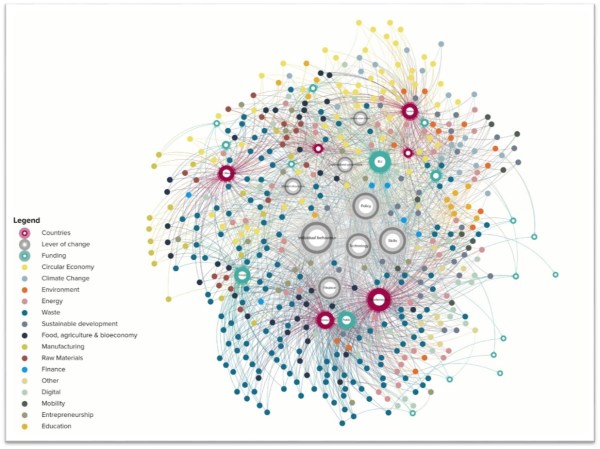
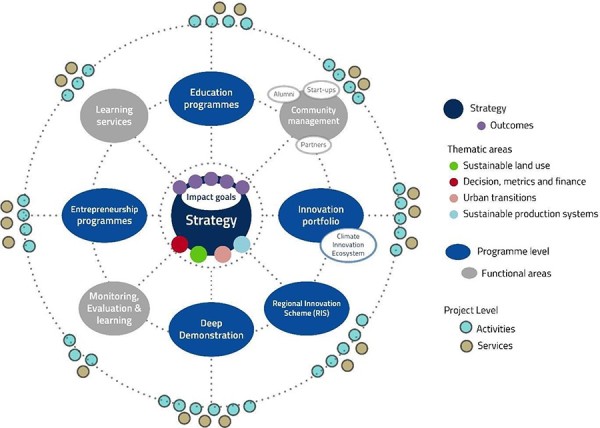
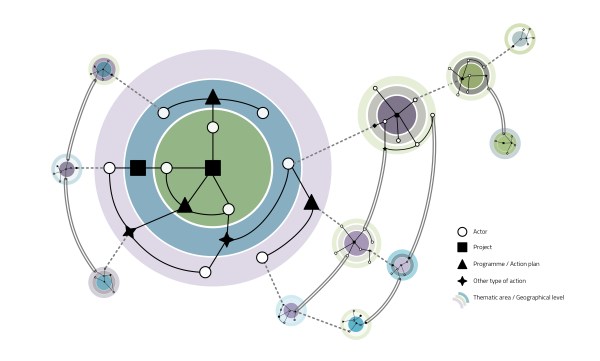
Innovation portfolios are complex structures where projects, programmes and actions enable links with interconnected subgroups of projects and programmes, by creating new strategic relations among multiple sectors, locations and levels of government. The application of challenge-led system mapping on innovation portfolios allows multi-stakeholder settings to explore strategic opportunities in terms of multiple nested and articulated innovation portfolios responding to different framings, financial logics and institutions.

Transformative Innovation Policy, Intermediation and Joint programming

In this workshop, we will cover the principles of transformative innovation policy, as well as how the use of new tools (Policy co-creation, X-Curve, Value Network Mapping, transformative theory of change) can contribute to closing the gap between science-policy-society in transformative innovation policy.

This workshop is organised in collaboration with the Austrian Institute of Technology

More on Transitions Policy Lab Series Here

Blog at WordPress.com.

Up ↑