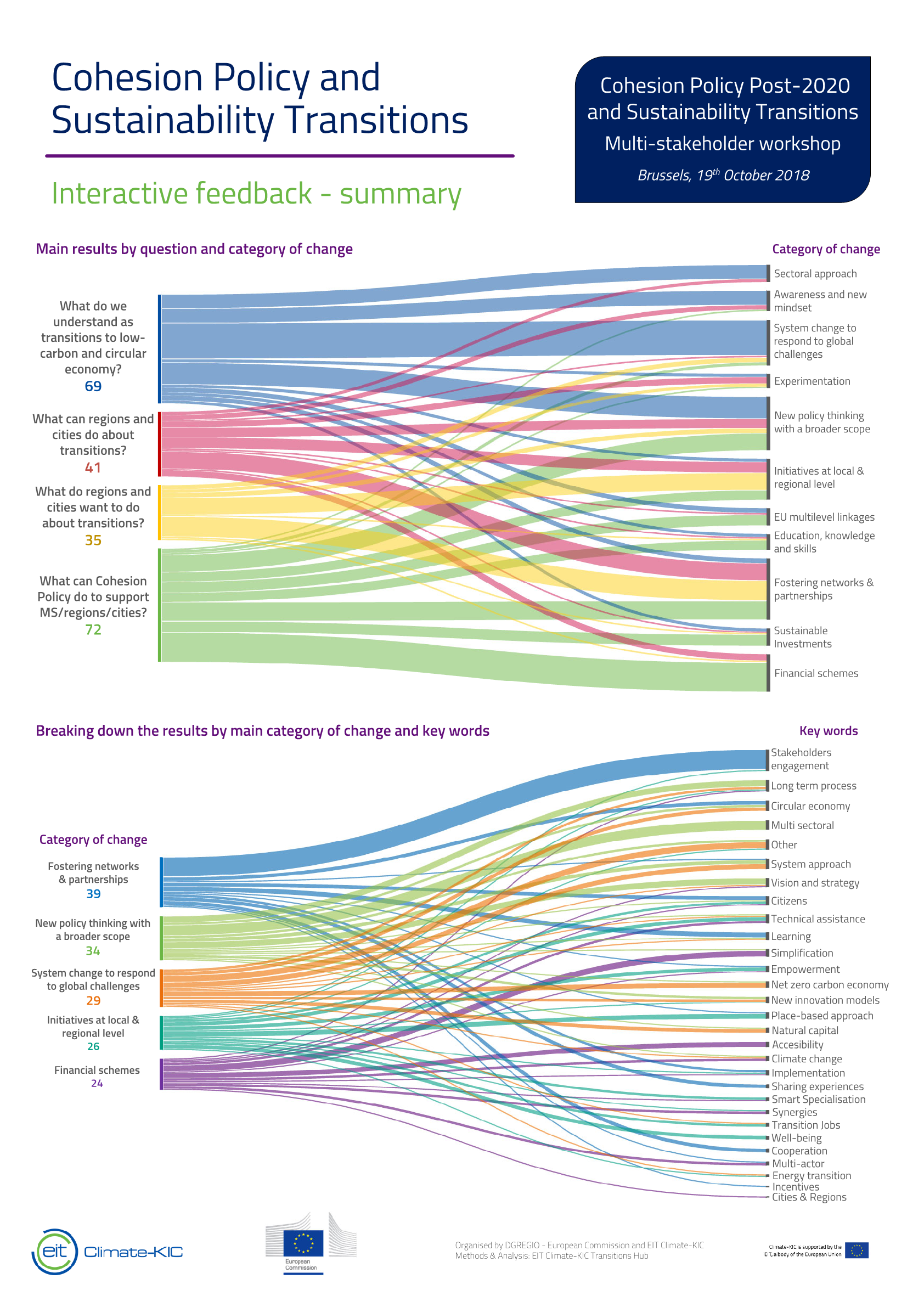
Triggering questions to understand the transition to low carbon economy, Brussels (2018)
Science, policy and practice interfaces for enabling innovation & sustainability
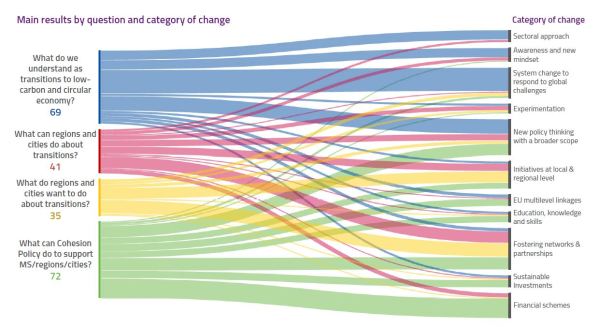
Triggering questions to understand the transition to low carbon economy, Brussels (2018)

This study provides evidence on the application of a regional policy model through a portfolio of actions to support entrepreneurship and development of professional competences. For doing so, we analyse the capacity building process delivered through the EIT RIS Climate-KIC programme in the context of peripheral European regions. In the context of the EIT RIS those are defined as the ones showing innovation performance below the EU average according to the European Innovation Scoreboard.
Emphasis is put on the alignment of multiple stakeholders with existing regional innovation plans such as Smart Specialisation Strategies (S3) by which policy mixes emerge with the purpose of reinforcing synergies and complementarities between EU, national, regional innovation initiatives while developing and activating large-scale “green” projects. The study addresses then the performance of the peripheral regions to improve the knowledge triangle integration. We argue that a variety of mechanisms for public-private collaboration is required to effectively support technological as well as practice-base innovation.
The case of European peripheral regions is a concrete example of the application of policy mixes by considering a variety of regional settings in terms of industrial history and governance configurations. The empirical study is based on the comparative analysis of the results of a portfolio of activities as well complementary interviews to regional policy officers. Results show that the successful alignment between regional priorities and low-carbon economy projects can be explained by how clear is the understanding of horizontal relations between stakeholders to define the long term direction of regional innovation.
Results has been already presented in the following conferences
Research Team: Cristian Matti, Julia Panny, Irene Vivas Lalinde and Balnca Juan Agulló

The interdependent challenges of climate change need innovation in systems of practice and provision, not single innovation in products and processes. In this context, cities face the challenge of dealing with climate risks and impacts while moving to more sustainable, zero-carbon and resilient pathways. This is a significant opportunity for a new, sustainable market to combine existing knowledge and economies of scale within urban environments to produce new systemic solutions. However, there are considerable differences in progress between the leading cities (mainly in Northern/Western Europe) and the ones lagging behind. Intra-EU disparity claims for the existence of platforms that follow a systemic approach instead of “picking the winner”. The structures that allow for coordinating various actors by combining individual goals and capacities with shared purposes, norms and expectations refer to innovation platforms.
This study addresses the role of innovation platforms as catalysers of existing (or new) innovation systems in sustainable urban transitions to explore market opportunities. Empirically, emphasis is put on analysing the underlying factors of geographical structural differences and the patterns of relations between knowledge spaces and governance configurations. To do so, we analyse the portfolio of projects and activities of the EIT Climate-KIC. This study aims to contribute to a better understanding of innovation platforms as a mechanism to accelerate innovation in the urban environment that can enhance collaboration to achieve more equally distributed progress across all of Europe.
The results of this study are based on the activities implemented in the EIT RIS programme covering peripheral EU regions.
Research project team: Cristian Matti, Irene Vivas Lalinde, Julia Panny and Balnca Juan Agulló

Action research project introducing system thinking in València Schools within the Context of the Educating Cities Association (2017)


Step-by-step short videos of tools from Visual Toolbox for System Innovation
Pentagonal problem
Actor Tree
Empathy map
Credential cards
Stakeholder map
Stakeholder Universe
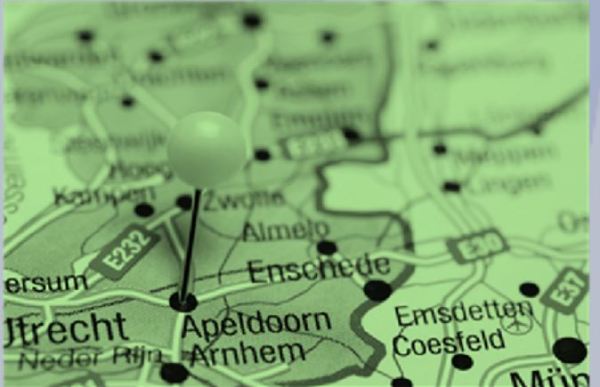
A multi-stakeholder process addressing the reformulation of the cleantech strategy of the City of Apeldoorn, The Netherlands (2016)


This study provides evidence of the policy learning process related to the translation and adaptation of a regional policy model to a new context while implementing a mayor process of transference of competences. Emphasis is put in the process of translation and adaptation of an external regional policy model (the EU RIS scheme) by looking at the different understandings of regional system of innovation through the analysis of regional assessments and proposals for regional innovation strategies designed by Chilean regions. By doing so, this study seeks to identify the critical elements related to capacity building at different level regarding the development of new institutional frameworks and coordination mechanism by considering the agency issues and different regional settings.
The case of Chilean regions is a concrete example from the few experience on adapting European policies in other context. It is also a relevant case regarding the re-configuring of multilevel governance system to support innovation in an emergent and globalized economy. Empirical study is base in document review and content analysis techniques as well as complementary interviews to policy officers. Results shows an increasing autonomy of the regional governments while main policy instruments and resources still keep under central coordination.

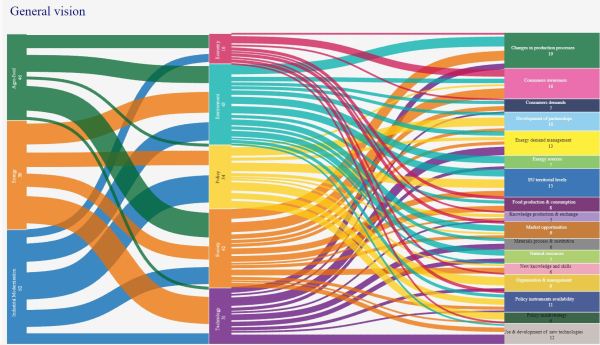
The pattern of specialization in the cities of the Transition Cities project is analysed by applying the Circos (Krzywinski et al., 2009) data graphics tool for structural studies. The exercise seeks to facilitate the analysis of specialization evidence from patterns in the data.
The working paper presents a new sociotechnical and systemic approach to urban specialization with a policy focus on challenge-led clusters. Specialization patterns are explored through urban sociotechnical systems where networks and organisations act as “transition arenas” in a policy shift to the meso regime level as a new focus of transformative innovation. It is an alternative to the traditional macro/micro split, more attuned to systemic rather than singular innovation. It offers a broader definition of innovation, highlighting social, organisational, and business model novelty.

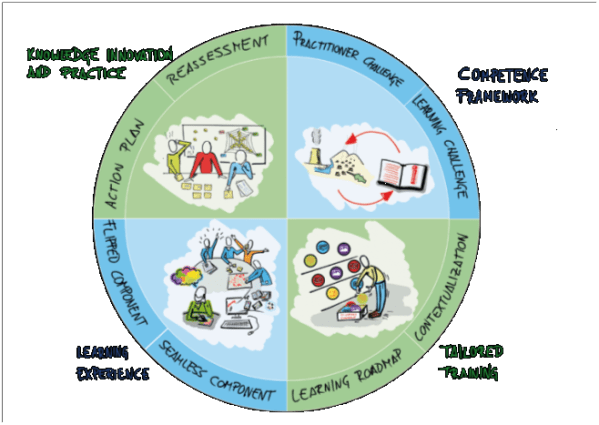
A learning approach for practitioners through active-blended format. Education Conference, Brighton (2016)

 CRISTIAN MATTI