Co-creation for Policy Tuner. Bringing design for policy into practice


I am delighted to share the new application of “the Tuner” from the EU Science, Research and Innovation and EIT – European Institute of Innovation and TechnologyClimate-KIC “Co-creation for Policy” handbook. The Tuner, a new online tool for co-creation, has been co-designed in collaboration with the Transformative Innovation Policy Consortium

Tool: https://lnkd.in/gg7Jismt

JRC Handbook: https://lnkd.in/ez_jXB6n

#sustainability#innovation#science#cocreation

X-Curve Booklet. A sensemaking tool to foster collective narratives on system change

The X-Curve is a visual tool to better understand the transition dynamics within society or a specific context (e.g. neighbourhood, city, region, etc.). It facilitates the co-creation of a common language and understanding of current societal dynamics. This handbook has been developed through the collaboration between DRIFT for transition and EIT Climate-KIC.

Download the booklet

Innovation portfolios, a practical approach to navigate transformative innovation

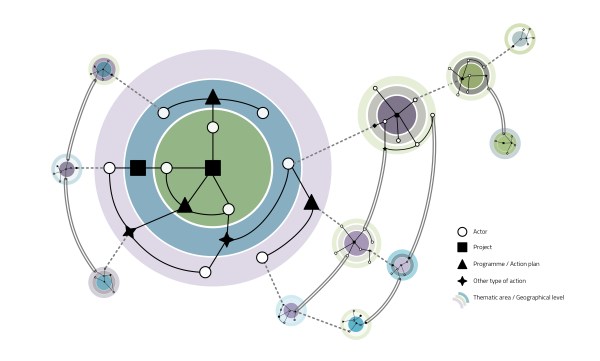
Innovation portfolios are complex structures where projects, programmes and actions enable links with interconnected subgroups of projects and programmes, by creating new strategic relations among multiple sectors, locations and levels of government. The application of challenge-led system mapping on innovation portfolios allows multi-stakeholder settings to explore strategic opportunities in terms of multiple nested and articulated innovation portfolios responding to different framings, financial logics and institutions.

Transition Policy Labs. Enabling capacity building, experimentation and design for policy to the practitioners community

In 2021, The Transition Policy Lab series supported policymakers in different countries to introduce policy-making practises by removing barriers to enable the necessary institutional change. It aimed to build capacity for co-designing and implementing systemic policies that can lead to transformative strategies and actions.

The #EIT Regional Innovation Scheme’s Transition Policy Labs, developed by the Transitions Hub, consisted of five interconnected capacity-building activities delivered in three different formats: Multi-stakeholder setting, science-based training and executive programmes.

Transitions Policy Labs Series 2021

  1. Co-creation for policy Here                                                                                                          Knowledge Partner: Joint Research Centre
  2. X-Curve for exploring transition dynamics Here                                                                   Knowledge Partner: Drift for transitions 
  3. Value Network Mapping Here                                                                                                     Knowledge Partner: Vito
  4. MEL Addressing Transformative Change Here                                                                      Knowledge Partner: Transformative Innovation Policy Consortium & MOTION project
  5. Transformative Innovation Policy  Here                                                                   Knowledge Partner: Austrian Institute of Technology

Capacity building agenda on joint programming in the circular economy. An instructional design approach

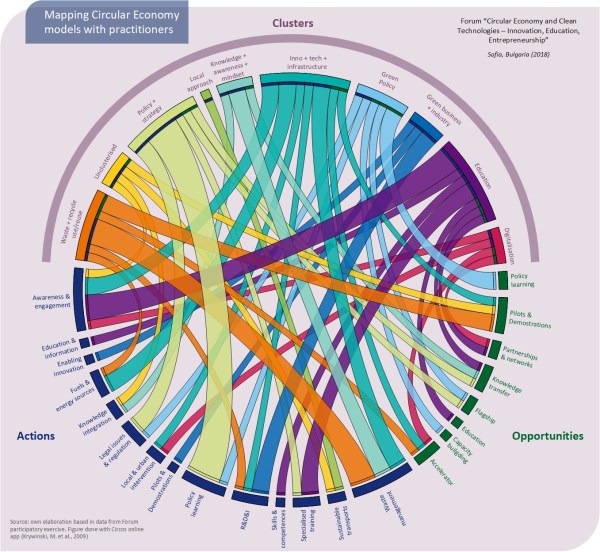
In the CICERONE project, we developed a capacity-building agenda as part of a collaborative framework by using triangulation of different methods, including input from programme officers and a series of sensemaking sessions organised to discuss different aspects of the agenda and align them with the MOOC, the Policy Toolkit and the Roadmap respectively. This strategic framework follows an improvement pathway logic where gaps and opportunities are addressed through a combined multi-level capacity development and instructional design model that allows for a tailored and contextualised approach to deliver actionable knowledge and ensure the best possible match between programme owner needs and available resources.

Download the report CICERONE Strategic Agenda for Institutional Capacity Building HERE

MOTION handbook. Developing a transformative theory of change

This handbook introduces actionable knowledge on developing A Transformative Theory of Change by applying a portfolio approach to address a systems innovation perspective for projects and programmes. Tools, methods and lessons learned result from working hand in hand with EIT Climate-KIC projects around a portfolio of knowledge services for sustainable systems transformation. The step-by-step methodology aims to support practitioners in designing, implementing, and evaluating projects aimed at transformative system change by combining the Theory of Change methodology with the Multi-Level Perspective (MLP). It can be used to facilitate a co-creation process among societal stakeholders invested in sustainability, connecting innovation with societal challenges through the effective delivery of knowledge service.
The handbook has been developed through the collaboration between the Transformative Innovation Policy Consortium, INGENIO-UPV, the Austrian Institute of Technology and EIT Climate-KIC as part of the MOTION EIT Climate-KIC project.
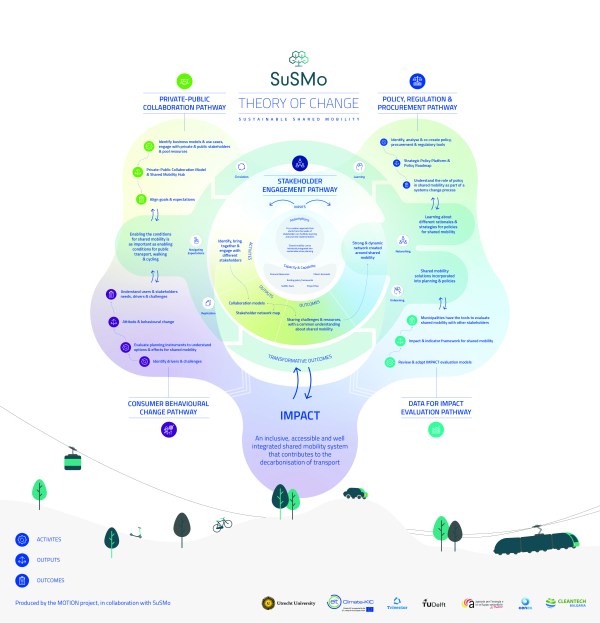
Download the handbook Here

Transformative territorial policy as a response to Grand Challenges and the European Green Deal

I have joined h Prof. Dominique Foray to explore the potential of systemic portfolios of projects for fostering transformative change in southern and central eastern European countries. By doing so, we combine concepts such as smart specialization, system innovation, regional development and mapping techniques to brings some insights on how practitioners can move forward to design and implement transformative territorial policy.

Knowledge management as a service for science-policy-practice interface

The webinar will cover methodological elements and practical applications of knowledge management as part of actions supporting policymakers in system mapping and policy co-design processes. In doing so, this webinar seeks to highlight applications and synergies with monitoring, evaluation and learning activities. The webinar will illustrate the broad context of policy mix and EU Framework, the case of Transitions Hub as a policy lab managing knowledge management processes as well as related examples on system mapping and policy co-design processes. This material is based in the Handbook Challenge-led system mapping, a knowledge management approach.

Blog at WordPress.com.

Up ↑