Redefining the Role of STI Policy in Achieving Just Sustainability Transitions

I had the privilege of participating in an insightful panel organised by OECD with a very diverse group of speakers to address this challenging topic : Jessica Ambler, Henrik Larsen, Mikael Román, Dmitry Plekhanov,Guillermo Anlló, and Ana Persic.

We we explored recommendations, guidelines or tools recently deployed to support relevant stakeholders in guiding the development of STI activities and outputs to prepare for and respond to global systemic threats. Exchanges between panelists and with the audience might focus on unpacking:

– Whether the scientific process and modern STI policy are well-equipped to support the realisation of just and inclusive sustainability transitions.

– The roles that IOs, specifically, can play in promoting and informing (transformative STI and STI policy reforms to enable transitions.

– Good practice and lessons learned through practical experience of supporting STI and STI policy in contributing to transitions.

The most critical challenges to mobilising STI to contribute to sustainability transitions and how IOs can help to overcome them.

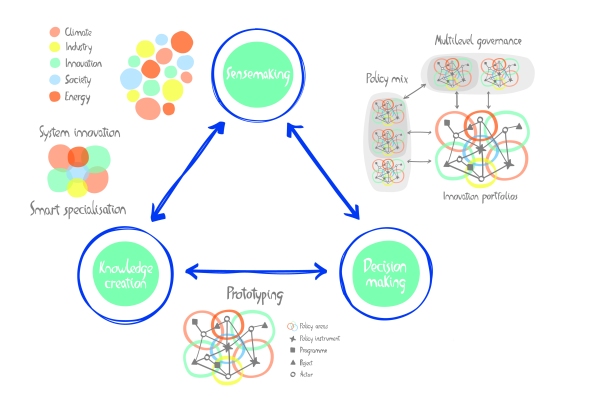
Co-creation for policy and Strategic foresight to build societal resilience

I had the privilege of participating in an insightful webinar organised by FUTURESILIENCE where we explored the dynamic areas of foresight and co-creation in policy development. It provides insights into the work of the JointResearchCentre EU Science, Research and Innovation to produce actionable knowledge to support a multi-stakeholder setting to steer the transformation process towards a sustainable future.

📖 See more about the publications here:
– Co-Creation for Policy Here
– Towards a fair and sustainable Europe 2050: Social and economic choices in sustainability transitions Here

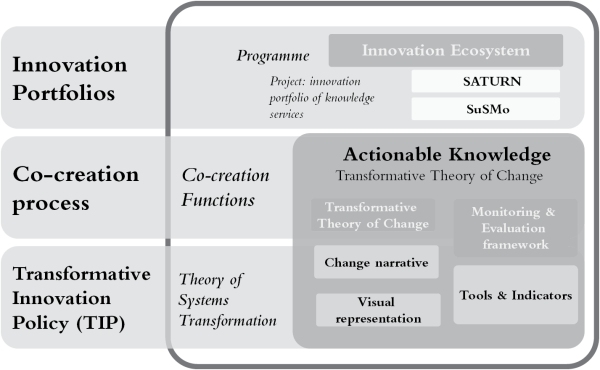
Co-creation for Transformative Innovation Policy: an implementation case for projects structured as portfolio of knowledge services

This papers presentes the results of a joint effort between #sciencepolicy, the Transformative Innovation Policy Consortium, and practitioners, the Climate-KIC, to produce new #knowledge on #cocreation for #policymaking
The publication gathers insights on Transformative Innovation Policies from the MOTION project by focusing on implementation aspects with an innovative look at #portfolios of knowledge services.

Thanks a lot to my co-authors Carla Alvial Palavicino and Christoph Brodnik, such a fantastic journey to get here!

Link to the paper

Co-creation for policy: Participatory methodologies to structure multi-stakeholder policymaking processes

This handbook aims at helping its users effectively co-create the robust policies we need today. It combines an entrepreneurial way of thinking and a concrete process for developing breakthrough ideas with a high chance of producing real-world impact. It presents a practitioner-oriented narrative for designing and implementing innovative participatory processes and workshops to address societal challenges – coordinated by policy-makers and with the active engagement of key stakeholders. It applies tried and tested self-organisation and design thinking principles for co-creation.

Download the handbook Here

Co-creation for Policy Tuner. Bringing design for policy into practice


I am delighted to share the new application of “the Tuner” from the EU Science, Research and Innovation and EIT – European Institute of Innovation and TechnologyClimate-KIC “Co-creation for Policy” handbook. The Tuner, a new online tool for co-creation, has been co-designed in collaboration with the Transformative Innovation Policy Consortium

Tool: https://lnkd.in/gg7Jismt

JRC Handbook: https://lnkd.in/ez_jXB6n

#sustainability#innovation#science#cocreation

Transition Policy Labs. Enabling capacity building, experimentation and design for policy to the practitioners community

In 2021, The Transition Policy Lab series supported policymakers in different countries to introduce policy-making practises by removing barriers to enable the necessary institutional change. It aimed to build capacity for co-designing and implementing systemic policies that can lead to transformative strategies and actions.

The #EIT Regional Innovation Scheme’s Transition Policy Labs, developed by the Transitions Hub, consisted of five interconnected capacity-building activities delivered in three different formats: Multi-stakeholder setting, science-based training and executive programmes.

Transitions Policy Labs Series 2021

  1. Co-creation for policy Here                                                                                                          Knowledge Partner: Joint Research Centre
  2. X-Curve for exploring transition dynamics Here                                                                   Knowledge Partner: Drift for transitions 
  3. Value Network Mapping Here                                                                                                     Knowledge Partner: Vito
  4. MEL Addressing Transformative Change Here                                                                      Knowledge Partner: Transformative Innovation Policy Consortium & MOTION project
  5. Transformative Innovation Policy  Here                                                                   Knowledge Partner: Austrian Institute of Technology

Capacity building agenda on joint programming in the circular economy. An instructional design approach

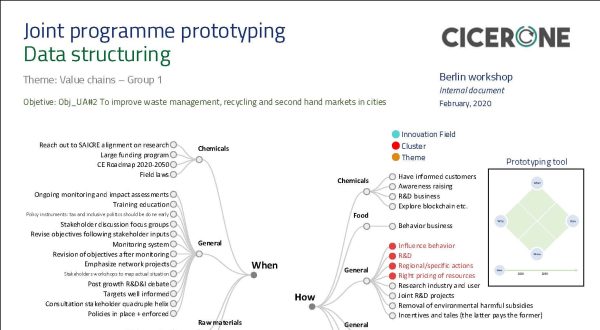
In the CICERONE project, we developed a capacity-building agenda as part of a collaborative framework by using triangulation of different methods, including input from programme officers and a series of sensemaking sessions organised to discuss different aspects of the agenda and align them with the MOOC, the Policy Toolkit and the Roadmap respectively. This strategic framework follows an improvement pathway logic where gaps and opportunities are addressed through a combined multi-level capacity development and instructional design model that allows for a tailored and contextualised approach to deliver actionable knowledge and ensure the best possible match between programme owner needs and available resources.

Download the report CICERONE Strategic Agenda for Institutional Capacity Building HERE

MOTION handbook. Developing a transformative theory of change

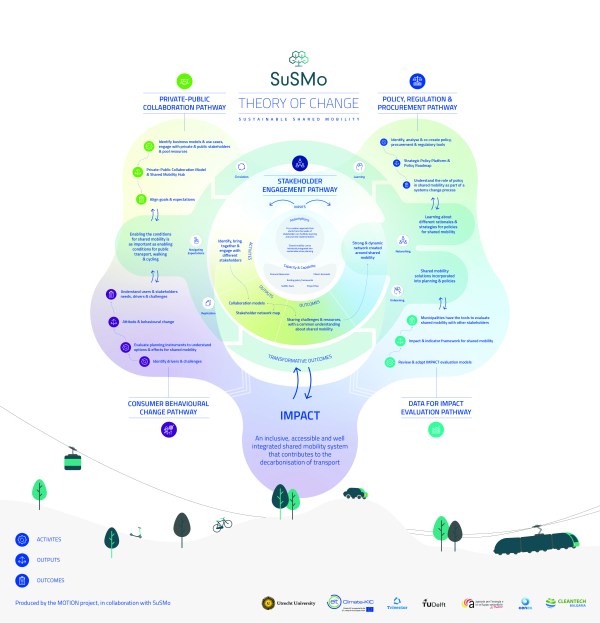
This handbook introduces actionable knowledge on developing A Transformative Theory of Change by applying a portfolio approach to address a systems innovation perspective for projects and programmes. Tools, methods and lessons learned result from working hand in hand with EIT Climate-KIC projects around a portfolio of knowledge services for sustainable systems transformation. The step-by-step methodology aims to support practitioners in designing, implementing, and evaluating projects aimed at transformative system change by combining the Theory of Change methodology with the Multi-Level Perspective (MLP). It can be used to facilitate a co-creation process among societal stakeholders invested in sustainability, connecting innovation with societal challenges through the effective delivery of knowledge service.
The handbook has been developed through the collaboration between the Transformative Innovation Policy Consortium, INGENIO-UPV, the Austrian Institute of Technology and EIT Climate-KIC as part of the MOTION EIT Climate-KIC project.

Download the handbook Here

Facilitating Joint Programming on Circular Economy

I have joined the H2020 CICERONE to contribute on the process of Joint Programming in R&I on Circular Economy. The project brings together countries, regions and cities committed to delivering circular economy research & innovation programmes in a joint and systemic way, via a new platform to that will increase knowledge sharing, networking, collaboration, and co-creation.

My contribution has mostly focus on process of co-design and developing and strategic capacity building agenda for policy makes addressing the challenging of joint programming as a multilevel, cross-sectoral and multi stakeholder policy process.

Blog at WordPress.com.

Up ↑