Transforming Systems Through Innovation Portfolios: A Journey Across Science, Policy, and Practice

Innovation is often seen as the spark of a new idea, but what if the real power lies in the connections that bring those ideas to life? My latest research, now published, delves into the concept of transformative innovation and the role of policy portfolios in driving systemic change.

Drawing on years of collaboration with EIT Climate-KIC, the Joint Research Centre (JRC), and the Transformative Innovation Policy Consortium (TIPC), this paper focuses on the sustainable food sector as a case study. It highlights the importance of “intermediation”—the ability to bridge gaps between science, policy, and practice—to orchestrate innovation ecosystems that can tackle complex challenges.

This work is deeply personal, reflecting the values and experiences I’ve gained from working with inspiring colleagues and organizations. It also builds on the narrative we developed in the EIT Climate-KIC/JRC handbook Co-creation for policy, emphasizing the need for collaboration across sectors and disciplines.

As we face urgent global challenges, I hope this research inspires others to explore the transformative potential of innovation portfolios. Together, we can create the frameworks needed for a more sustainable and equitable future.

Original manuscript:

This is an original manuscript of an article published by Taylor & Francis in Innovation: The European Journal of Social Science Research on 12 March, available at: https://doi.org/10.1080/13511610.2024.2444535

Redefining the Role of STI Policy in Achieving Just Sustainability Transitions

I had the privilege of participating in an insightful panel organised by OECD with a very diverse group of speakers to address this challenging topic : Jessica Ambler, Henrik Larsen, Mikael Román, Dmitry Plekhanov,Guillermo Anlló, and Ana Persic.

We we explored recommendations, guidelines or tools recently deployed to support relevant stakeholders in guiding the development of STI activities and outputs to prepare for and respond to global systemic threats. Exchanges between panelists and with the audience might focus on unpacking:

– Whether the scientific process and modern STI policy are well-equipped to support the realisation of just and inclusive sustainability transitions.

– The roles that IOs, specifically, can play in promoting and informing (transformative STI and STI policy reforms to enable transitions.

– Good practice and lessons learned through practical experience of supporting STI and STI policy in contributing to transitions.

The most critical challenges to mobilising STI to contribute to sustainability transitions and how IOs can help to overcome them.

Co-creation for Policy: Multi-actor agency enabling transformation processes

Co-creation for policy with a wide range of actors – including governments, civil society and business at all levels – is essential for building the capacity to act in complex and uncertain circumstances. To support the journey of transformational processes, co-creation for policy needs to take place at all levels of governance. Agency (capacity to act) varies from actor to actor and depends on the context. How best to organise this capacity? Which actors are best suited to act at which stages? Understanding the potential of the co-creation process to enable multi-actor agency can play a vital role in developing policies and interventions in the coming decades. Using examples at project, programme and multi-location levels, this webinar will illustrate processes and practises that support building multi-actor agency through co-creation processes in the context of strategic intervention areas to address sustainability transitions.

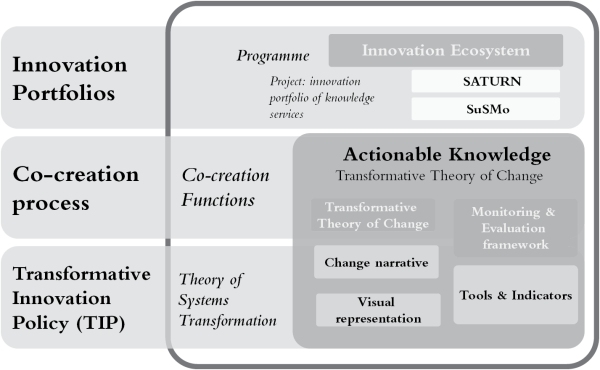
Co-creation for Transformative Innovation Policy: an implementation case for projects structured as portfolio of knowledge services

This papers presentes the results of a joint effort between #sciencepolicy, the Transformative Innovation Policy Consortium, and practitioners, the Climate-KIC, to produce new #knowledge on #cocreation for #policymaking
The publication gathers insights on Transformative Innovation Policies from the MOTION project by focusing on implementation aspects with an innovative look at #portfolios of knowledge services.

Thanks a lot to my co-authors Carla Alvial Palavicino and Christoph Brodnik, such a fantastic journey to get here!

Link to the paper

Exploring indicators for monitoring sociotechnical system transitions through portfolio networks

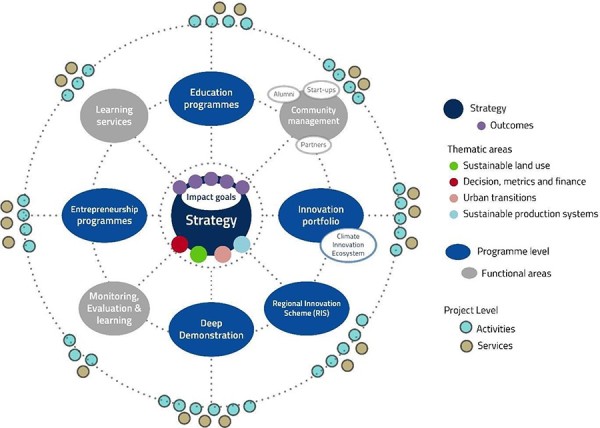
This paper presents a new approach to #monitoringandevaluation in #sustainability#transitions by focusing on #innovation#portfolios as infrastructure for programme-based investments. It brings new insights for innovation agencies working with project portfolios.

This publication results from a collaboration between the Transformative Innovation Policy Consortium (TIPC) and the EIT – European Institute of Innovation and TechnologyClimate-KIC, to create new #knowledge on #scienceforpolicy and #innovation.

Many thanks to my co-authors Caetano C.R. Penna and Oscar Yandy Romero Goyeneche, I really enjoyed working with you and connecting the dots!

Link to the paper

Towards a fair and sustainable Europe 2050: Social and economic choices in sustainability transitions

The study explores the interplay between #sustainability #transitions and #foresight to highlight the relevance of the agency of EU actors in shaping Europe’s sustainable future.
As part of an exceptional team including experts from multiple organisations, we delved into the complexities of sustainability transitions, examining how foresight methodologies and evidence-based approaches can guide policy decisions.
This report underscores the urgent need for #transformative policies prioritising sustainability, social equity, and economic prosperity. By leveraging #science and #research, we can drive informed #decisionmaking processes that address the challenges of today and pave the way for a sustainable #Europe by 2050.
I am immensely proud to have contributed to this report, which serves as #actionable  #knowledge for policymakers, researchers, and stakeholders invested in sustainable development.

Download the report Here

Co-creation for policy: Participatory methodologies to structure multi-stakeholder policymaking processes

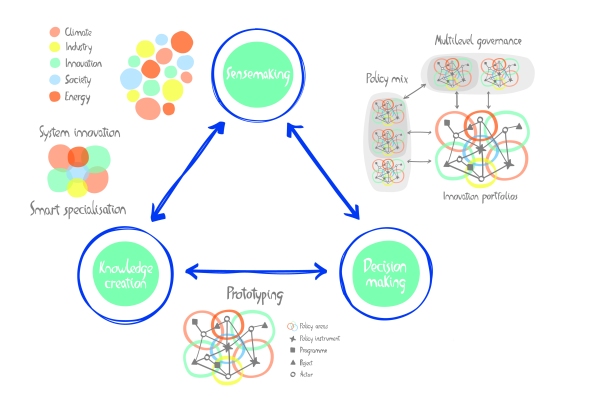
This handbook aims at helping its users effectively co-create the robust policies we need today. It combines an entrepreneurial way of thinking and a concrete process for developing breakthrough ideas with a high chance of producing real-world impact. It presents a practitioner-oriented narrative for designing and implementing innovative participatory processes and workshops to address societal challenges – coordinated by policy-makers and with the active engagement of key stakeholders. It applies tried and tested self-organisation and design thinking principles for co-creation.

Download the handbook Here

Co-creation for Policy Tuner. Bringing design for policy into practice


I am delighted to share the new application of “the Tuner” from the EU Science, Research and Innovation and EIT – European Institute of Innovation and TechnologyClimate-KIC “Co-creation for Policy” handbook. The Tuner, a new online tool for co-creation, has been co-designed in collaboration with the Transformative Innovation Policy Consortium

Tool: https://lnkd.in/gg7Jismt

JRC Handbook: https://lnkd.in/ez_jXB6n

#sustainability#innovation#science#cocreation

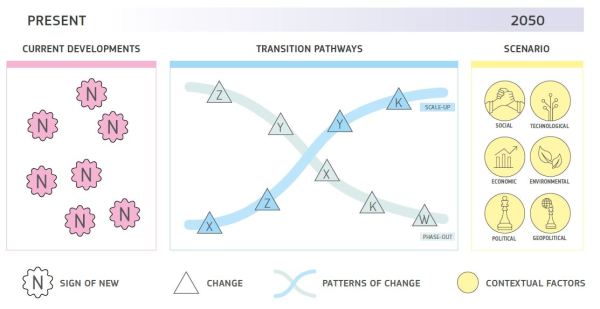
X-Curve Booklet. A sensemaking tool to foster collective narratives on system change

The X-Curve is a visual tool to better understand the transition dynamics within society or a specific context (e.g. neighbourhood, city, region, etc.). It facilitates the co-creation of a common language and understanding of current societal dynamics. This handbook has been developed through the collaboration between DRIFT for transition and EIT Climate-KIC.

Download the booklet

Blog at WordPress.com.

Up ↑