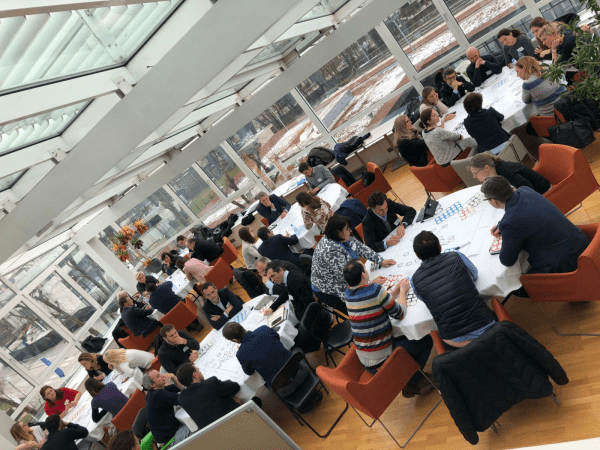
MOTION handbook. Developing a transformative theory of change

This handbook introduces actionable knowledge on developing A Transformative Theory of Change by applying a portfolio approach to address a systems innovation perspective for projects and programmes. Tools, methods and lessons learned result from working hand in hand with EIT Climate-KIC projects around a portfolio of knowledge services for sustainable systems transformation. The step-by-step methodology aims to support practitioners in designing, implementing, and evaluating projects aimed at transformative system change by combining the Theory of Change methodology with the Multi-Level Perspective (MLP). It can be used to facilitate a co-creation process among societal stakeholders invested in sustainability, connecting innovation with societal challenges through the effective delivery of knowledge service.
The handbook has been developed through the collaboration between the Transformative Innovation Policy Consortium, INGENIO-UPV, the Austrian Institute of Technology and EIT Climate-KIC as part of the MOTION EIT Climate-KIC project.

Download the handbook Here

Transformative territorial policy as a response to Grand Challenges and the European Green Deal

I have joined h Prof. Dominique Foray to explore the potential of systemic portfolios of projects for fostering transformative change in southern and central eastern European countries. By doing so, we combine concepts such as smart specialization, system innovation, regional development and mapping techniques to brings some insights on how practitioners can move forward to design and implement transformative territorial policy.

Knowledge management as a service for science-policy-practice interface

The webinar will cover methodological elements and practical applications of knowledge management as part of actions supporting policymakers in system mapping and policy co-design processes. In doing so, this webinar seeks to highlight applications and synergies with monitoring, evaluation and learning activities. The webinar will illustrate the broad context of policy mix and EU Framework, the case of Transitions Hub as a policy lab managing knowledge management processes as well as related examples on system mapping and policy co-design processes. This material is based in the Handbook Challenge-led system mapping, a knowledge management approach.

Facilitating Joint Programming on Circular Economy

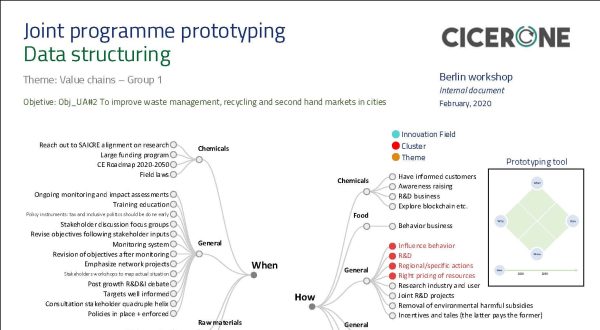
I have joined the H2020 CICERONE to contribute on the process of Joint Programming in R&I on Circular Economy. The project brings together countries, regions and cities committed to delivering circular economy research & innovation programmes in a joint and systemic way, via a new platform to that will increase knowledge sharing, networking, collaboration, and co-creation.

My contribution has mostly focus on process of co-design and developing and strategic capacity building agenda for policy makes addressing the challenging of joint programming as a multilevel, cross-sectoral and multi stakeholder policy process.

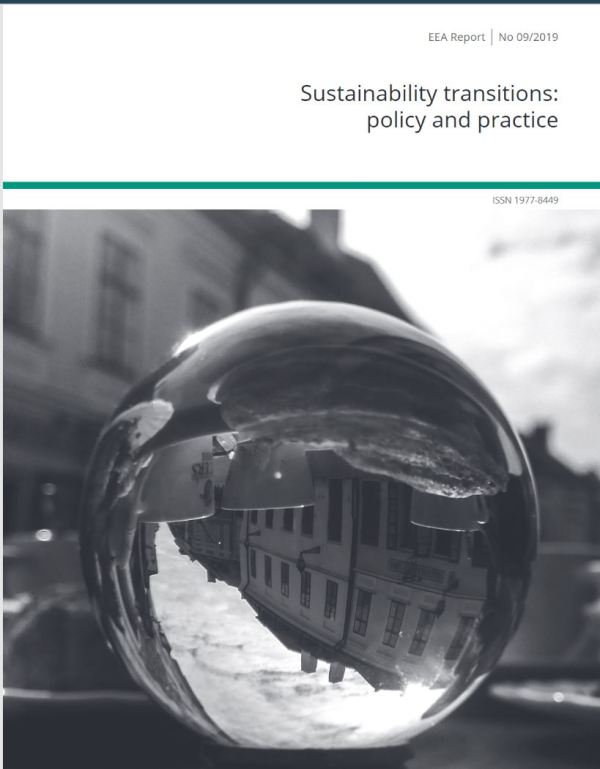
EEA Report Sustainability transitions: policy and practice

I was invited to contribute to the discussion on science-policy-practice interface with a group of experts on sustainability transitions and EU Policy as part of the work of the European Environmental Agency.

The result is a report aimed to go beyond theoretical discussions to explore the practical implications of transitions research for policy and practice, building on the insights from past assessments. It highlights the growing links to established EU policy frameworks and identifies how transitions thinking is being operationalised at different scales across Europe. Co-authored by leading experts in transitions studies, the report has also benefited strongly from interactions with EEA partners in multiple policy areas at a workshop co-hosted with the European Commission’s European Political Strategy Centre in July 2018.

Link to the report

Policy mixes fostering regional capacity in low carbon economy in peripheral European regions

This study provides evidence on the application of a regional policy model through a portfolio of actions to support entrepreneurship and development of professional competences. For doing so, we analyse the capacity building process delivered through the EIT RIS Climate-KIC programme in the context of peripheral European regions. In the context of the EIT RIS those are defined as the ones showing innovation performance below the EU average according to the European Innovation Scoreboard.

Emphasis is put on the alignment of multiple stakeholders with existing regional innovation plans such as Smart Specialisation Strategies (S3) by which policy mixes emerge with the purpose of reinforcing synergies and complementarities between EU, national, regional innovation initiatives while developing and activating large-scale “green” projects. The study addresses then the performance of the peripheral regions to improve the knowledge triangle integration. We argue that a variety of mechanisms for public-private collaboration is required to effectively support technological as well as practice-base innovation.

The case of European peripheral regions is a concrete example of the application of policy mixes by considering a variety of regional settings in terms of industrial history and governance configurations. The empirical study is based on the comparative analysis of the results of a portfolio of activities as well complementary interviews to regional policy officers. Results show that the successful alignment between regional priorities and low-carbon economy projects can be explained by how clear is the understanding of horizontal relations between stakeholders to define the long term direction of regional innovation.

Results has been already presented in the following conferences

  • RSA Annual Conference 2017 “the Great Regional Awakening: New Directions“, 4th-7thJune 2017 ,Dublin, Ireland

Abstract book

  • 12th CONFERENCE REGIONAL INNOVATION POLICIES (RIP 2017), 26-27 October 2017, Santiago de Compostela, Spain

Final programme

  • European Week of Region and Cities – Master Class 2017

Final programme

Research Team: Cristian Matti, Julia Panny, Irene Vivas Lalinde and Balnca  Juan Agulló
 

Blog at WordPress.com.

Up ↑