Exploring indicators for monitoring sociotechnical system transitions through portfolio networks

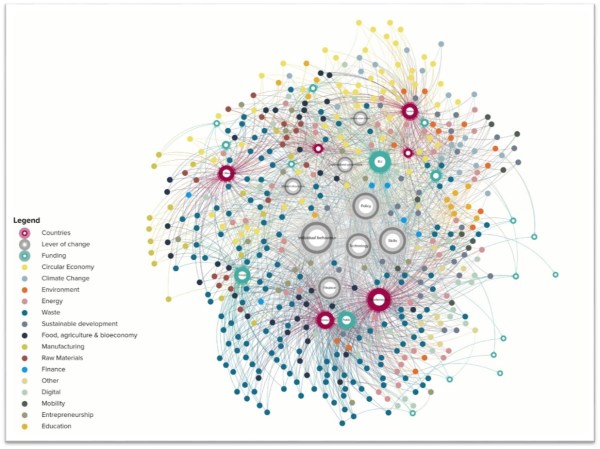
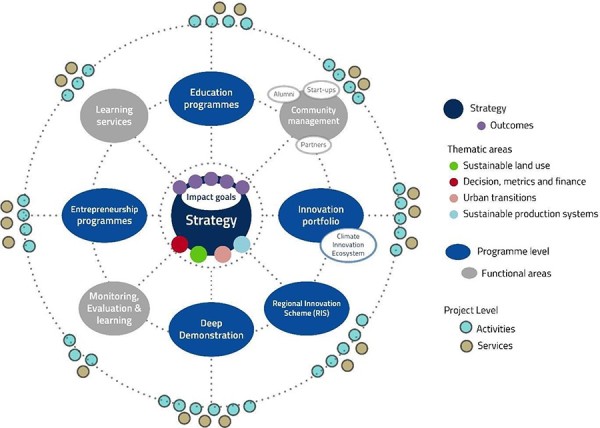
This paper presents a new approach to #monitoringandevaluation in #sustainability#transitions by focusing on #innovation#portfolios as infrastructure for programme-based investments. It brings new insights for innovation agencies working with project portfolios.

This publication results from a collaboration between the Transformative Innovation Policy Consortium (TIPC) and the EIT – European Institute of Innovation and TechnologyClimate-KIC, to create new #knowledge on #scienceforpolicy and #innovation.

Many thanks to my co-authors Caetano C.R. Penna and Oscar Yandy Romero Goyeneche, I really enjoyed working with you and connecting the dots!
Link to the paper

Towards a fair and sustainable Europe 2050: Social and economic choices in sustainability transitions

The study explores the interplay between #sustainability #transitions and #foresight to highlight the relevance of the agency of EU actors in shaping Europe’s sustainable future.
As part of an exceptional team including experts from multiple organisations, we delved into the complexities of sustainability transitions, examining how foresight methodologies and evidence-based approaches can guide policy decisions.
This report underscores the urgent need for #transformative policies prioritising sustainability, social equity, and economic prosperity. By leveraging #science and #research, we can drive informed #decisionmaking processes that address the challenges of today and pave the way for a sustainable #Europe by 2050.
I am immensely proud to have contributed to this report, which serves as #actionable  #knowledge for policymakers, researchers, and stakeholders invested in sustainable development.

Download the report Here

Empowering Tomorrow: A Leap into Anticipatory Innovation Governance

In the dynamic innovation landscape, I embarked with the OECD-OPSI team on a transformative journey to co-create a methodology for anticipatory innovation governance. This collaborative effort was more than a task; it was a commitment to reinforce the collaboration between the EU Policy Lab at the Joint Research Centre and the OECD-OPSI to explore new ways to help multiple actors embrace a discussion about the future as part of a learning process.

My contribution aimed not only to streamline methodologies but also to ignite a collective interest in navigating the uncharted territory of co-creating anticipatory innovation capacity.

In this journey, I have supported the team in designing workshops and processes, contributed to the insights gathered in the OECD report The Public Governance of Anticipatory Innovation Ecosystems in Latvia and brought emerging questions about the role of co-creation in developing anticipatory capacity in academic forums such as the 2023 EU-SPRI annual conference and the 62 ERSA conference.

We are now working together in the LIMinal project to turn those lessons learned into actionable knowledge to build anticipatory capacity but also better understand how that capacity can be better distributed among multiple actors across the innovation ecosystem and, in doing so, enable the capacity to act to face together the future.

Co-creation for policy: Participatory methodologies to structure multi-stakeholder policymaking processes

This handbook aims at helping its users effectively co-create the robust policies we need today. It combines an entrepreneurial way of thinking and a concrete process for developing breakthrough ideas with a high chance of producing real-world impact. It presents a practitioner-oriented narrative for designing and implementing innovative participatory processes and workshops to address societal challenges – coordinated by policy-makers and with the active engagement of key stakeholders. It applies tried and tested self-organisation and design thinking principles for co-creation.

Download the handbook Here

Co-creation for Policy Tuner. Bringing design for policy into practice


I am delighted to share the new application of “the Tuner” from the EU Science, Research and Innovation and EIT – European Institute of Innovation and TechnologyClimate-KIC “Co-creation for Policy” handbook. The Tuner, a new online tool for co-creation, has been co-designed in collaboration with the Transformative Innovation Policy Consortium

Tool: https://lnkd.in/gg7Jismt

JRC Handbook: https://lnkd.in/ez_jXB6n

#sustainability#innovation#science#cocreation

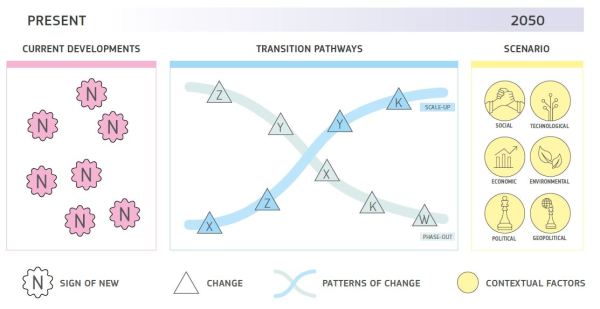
X-Curve Booklet. A sensemaking tool to foster collective narratives on system change

The X-Curve is a visual tool to better understand the transition dynamics within society or a specific context (e.g. neighbourhood, city, region, etc.). It facilitates the co-creation of a common language and understanding of current societal dynamics. This handbook has been developed through the collaboration between DRIFT for transition and EIT Climate-KIC.

Download the booklet

Innovation portfolios, a practical approach to navigate transformative innovation

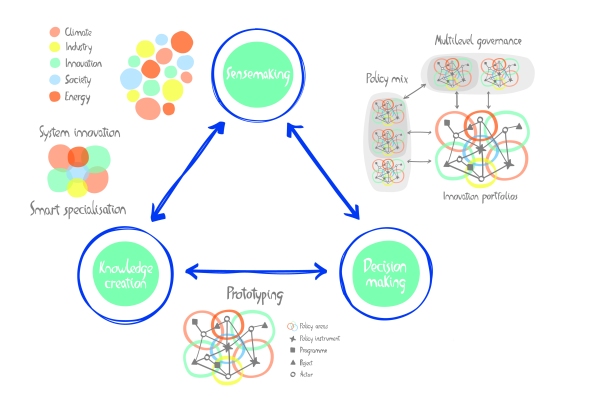
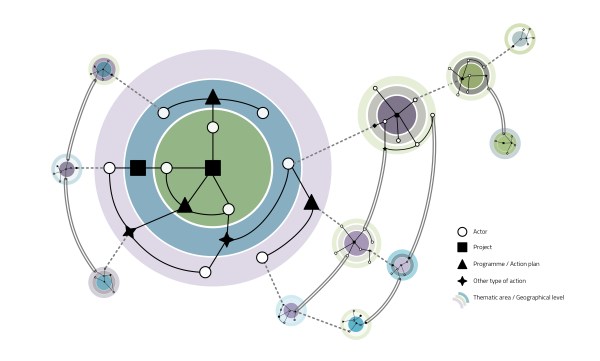
Innovation portfolios are complex structures where projects, programmes and actions enable links with interconnected subgroups of projects and programmes, by creating new strategic relations among multiple sectors, locations and levels of government. The application of challenge-led system mapping on innovation portfolios allows multi-stakeholder settings to explore strategic opportunities in terms of multiple nested and articulated innovation portfolios responding to different framings, financial logics and institutions.

Transition Policy Labs. Enabling capacity building, experimentation and design for policy to the practitioners community

In 2021, The Transition Policy Lab series supported policymakers in different countries to introduce policy-making practises by removing barriers to enable the necessary institutional change. It aimed to build capacity for co-designing and implementing systemic policies that can lead to transformative strategies and actions.

The #EIT Regional Innovation Scheme’s Transition Policy Labs, developed by the Transitions Hub, consisted of five interconnected capacity-building activities delivered in three different formats: Multi-stakeholder setting, science-based training and executive programmes.

Transitions Policy Labs Series 2021

  1. Co-creation for policy Here                                                                                                          Knowledge Partner: Joint Research Centre
  2. X-Curve for exploring transition dynamics Here                                                                   Knowledge Partner: Drift for transitions 
  3. Value Network Mapping Here                                                                                                     Knowledge Partner: Vito
  4. MEL Addressing Transformative Change Here                                                                      Knowledge Partner: Transformative Innovation Policy Consortium & MOTION project
  5. Transformative Innovation Policy  Here                                                                   Knowledge Partner: Austrian Institute of Technology

Blog at WordPress.com.

Up ↑