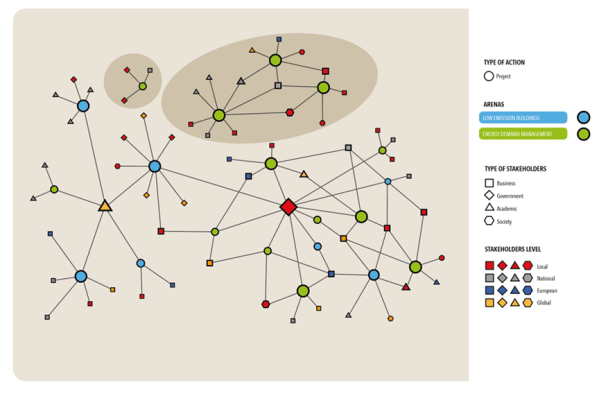
Multi-stakeholder mapping of Industrial simbiosis opportunities

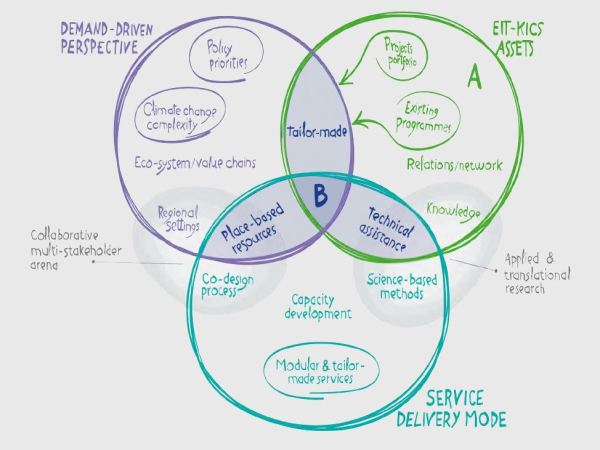
I have supported the H2020 SCALER by bringing methods for multi-stakeholder dialogue on innovation opportunities in industrial symbiosis. Knowledge visualisation here has been a key for making the actionable knowledge accessible.

The project provides mechanisms to accelerate the journey towards efficient and quick implementation of industrial symbiosis in the European process industry. We do this by developing action plans and adapted solutions to industrial stakeholders and communities.

Facilitating Joint Programming on Circular Economy

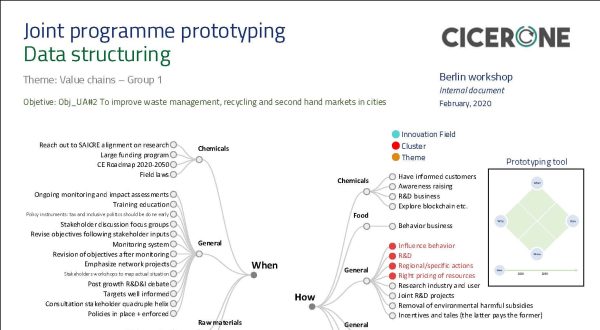
I have joined the H2020 CICERONE to contribute on the process of Joint Programming in R&I on Circular Economy. The project brings together countries, regions and cities committed to delivering circular economy research & innovation programmes in a joint and systemic way, via a new platform to that will increase knowledge sharing, networking, collaboration, and co-creation.

My contribution has mostly focus on process of co-design and developing and strategic capacity building agenda for policy makes addressing the challenging of joint programming as a multilevel, cross-sectoral and multi stakeholder policy process.

A Game for All Seasons: Lessons and Learnings from the JRC’s Scenario Exploration System

In this paper, I explored with several researchers and practitioners the application of foresight methods in a diverse collection of settings.

The European Commission Joint Research Centre’s (JRC) Scenario Exploration System (SES) is a foresight gaming system developed to facilitate the application of futures thinking to policy-making. It was originally geared at engaging EU policy-makers with scenarios in a facilitated process with a low learning curve.

Specifically, the SES was designed to help participants, in less than three hours, to engage in systemic thinking with a long-term perspective and to explore alternative futures on specific issues and themes. When applied in various contexts, the SES proved to have a broader range of applications, which led to communities of practice emerging around the tool.

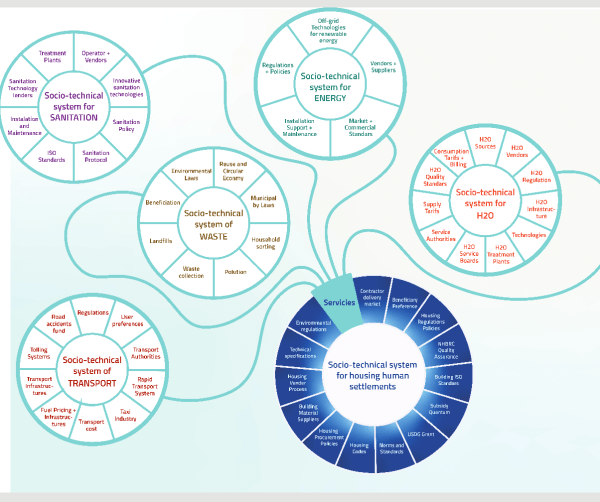
One of the cases included in the paper is the application of SES in the EIT Climate-KIC project Climate Mitigation Fund where we addressed the challenges of facilitating a horizontal problem-solving process by combining knowledge from public authorities, SMEs and experts to redefine the socio-technical system in which regional climate funds can operate efficiently. Workshops in Bologna and Frankfurt applied visual tools created by the Transitions Hub for easing negotiation of complex issues.

Link to the paper
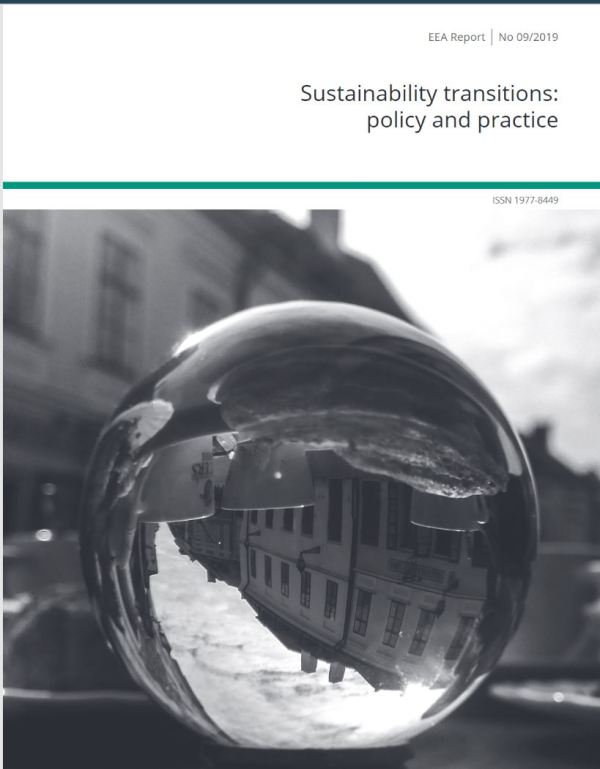
EEA Report Sustainability transitions: policy and practice

I was invited to contribute to the discussion on science-policy-practice interface with a group of experts on sustainability transitions and EU Policy as part of the work of the European Environmental Agency.

The result is a report aimed to go beyond theoretical discussions to explore the practical implications of transitions research for policy and practice, building on the insights from past assessments. It highlights the growing links to established EU policy frameworks and identifies how transitions thinking is being operationalised at different scales across Europe. Co-authored by leading experts in transitions studies, the report has also benefited strongly from interactions with EEA partners in multiple policy areas at a workshop co-hosted with the European Commission’s European Political Strategy Centre in July 2018.

Link to the report

A system innovation approach for schools

In 2017, the Visual Toolbox for System Innovation was part of a lab to develop new tools for schools. Considering a modular approach, including the EIT RM @Schools approach and other methods proposed by partners of both KICs, such as myclimate and Solutions for the Planet, they were part of the design, testing and implementation of an integrated common module.
The @GreenSchools aim to improve human capital by extending high-quality and inspiring training and methodologies developed by the 6 existing KICs for higher education to the wider society to promote a more open, innovative and entrepreneurial mindset.

Download the @GreenSchools Guideline HERE

This project was the nucleus for the Young Innovators Programme launched in 2018, which aims to support teachers and educators in improving systems thinking and solving complex problems in the classroom. The emergence of this Young Innovator Programme points us to the application of the challenge-based approach in the educational context. This is a collective problem-solving perspective originally developed by the Climate KIC Transitions Hub to address transitions to sustainability in socio-economic systems. The aim of the training for teachers is to introduce a systems innovation approach that raises awareness of climate change challenges and promotes creative thinking and climate innovation skills among the younger generation (12-18 years).
The resulting Teacher’s Guide is a comprehensive handbook for teachers and educators with clear steps and practical tips on facilitation.


Download Teacher’s Guide HERE

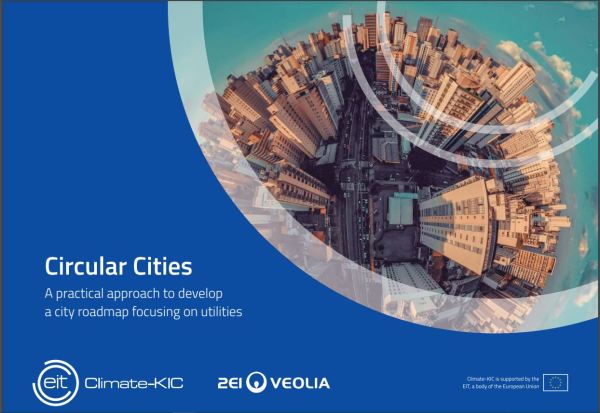
Circular Cities project. A step forward on using road mapping for policymaking in urban development

The Circular Cities project has helps multiple actors to identify the effects, both positive and negative, of incorporating circularity into urban planning instruments, as well as how these can be assessed. The outcomes are meant to help policymakers, investors, businesses, consumers and civil society to find the most promising transition pathways.

We have gathered the lesson learn a visual document.

Blog at WordPress.com.

Up ↑