Circular Cities Dashboard

In this project I have supported several partners to develop good practices for achieving more and better dialogue between systemic actors to establish a collaborative multi-stakeholder arena in the utilities sector starting with a demand-led approach, working with city authorities, regional bodies, governments, and industry leaders committed to transitioning to the circular economy.

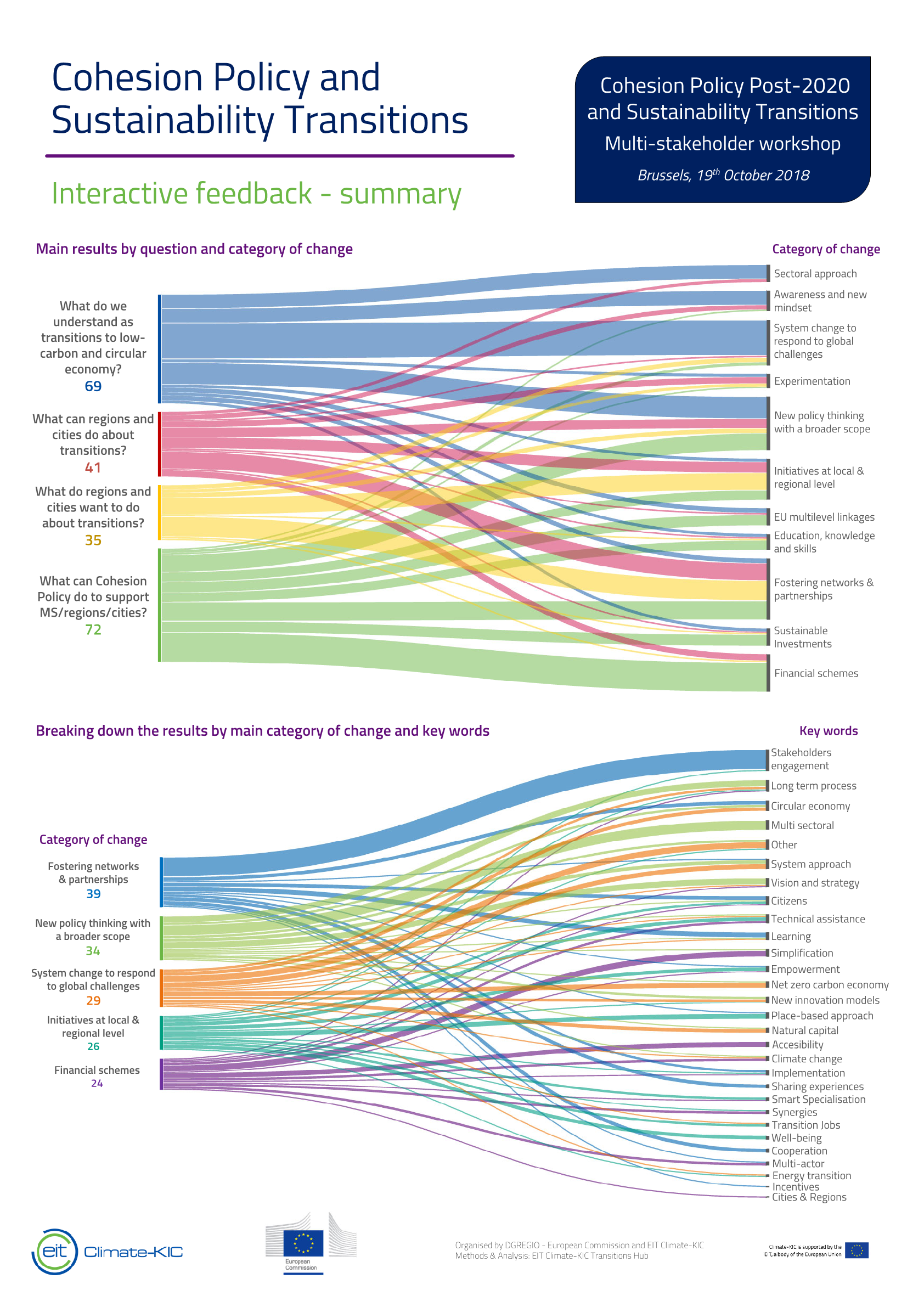
Dashboard of knowledge visualisations.

A system innovation approach for schools

In 2017, the Visual Toolbox for System Innovation was part of a lab to develop new tools for schools. Considering a modular approach, including the EIT RM @Schools approach and other methods proposed by partners of both KICs, such as myclimate and Solutions for the Planet, they were part of the design, testing and implementation of an integrated common module.
The @GreenSchools aim to improve human capital by extending high-quality and inspiring training and methodologies developed by the 6 existing KICs for higher education to the wider society to promote a more open, innovative and entrepreneurial mindset.

Download the @GreenSchools Guideline HERE

This project was the nucleus for the Young Innovators Programme launched in 2018, which aims to support teachers and educators in improving systems thinking and solving complex problems in the classroom. The emergence of this Young Innovator Programme points us to the application of the challenge-based approach in the educational context. This is a collective problem-solving perspective originally developed by the Climate KIC Transitions Hub to address transitions to sustainability in socio-economic systems. The aim of the training for teachers is to introduce a systems innovation approach that raises awareness of climate change challenges and promotes creative thinking and climate innovation skills among the younger generation (12-18 years).
The resulting Teacher’s Guide is a comprehensive handbook for teachers and educators with clear steps and practical tips on facilitation.


Download Teacher’s Guide HERE

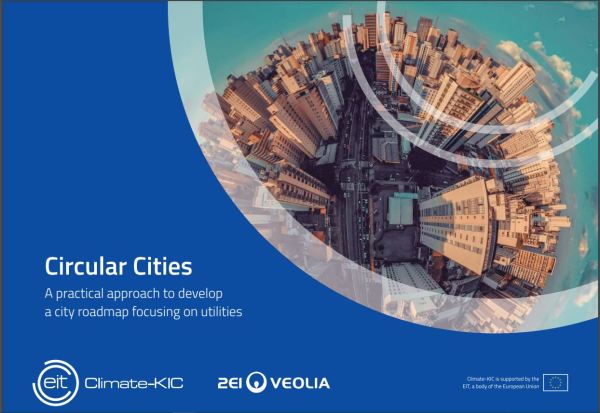
Circular Cities project. A step forward on using road mapping for policymaking in urban development

The Circular Cities project has helps multiple actors to identify the effects, both positive and negative, of incorporating circularity into urban planning instruments, as well as how these can be assessed. The outcomes are meant to help policymakers, investors, businesses, consumers and civil society to find the most promising transition pathways.

We have gathered the lesson learn a visual document.

Policy mixes fostering regional capacity in low carbon economy in peripheral European regions

This study provides evidence on the application of a regional policy model through a portfolio of actions to support entrepreneurship and development of professional competences. For doing so, we analyse the capacity building process delivered through the EIT RIS Climate-KIC programme in the context of peripheral European regions. In the context of the EIT RIS those are defined as the ones showing innovation performance below the EU average according to the European Innovation Scoreboard.

Emphasis is put on the alignment of multiple stakeholders with existing regional innovation plans such as Smart Specialisation Strategies (S3) by which policy mixes emerge with the purpose of reinforcing synergies and complementarities between EU, national, regional innovation initiatives while developing and activating large-scale “green” projects. The study addresses then the performance of the peripheral regions to improve the knowledge triangle integration. We argue that a variety of mechanisms for public-private collaboration is required to effectively support technological as well as practice-base innovation.

The case of European peripheral regions is a concrete example of the application of policy mixes by considering a variety of regional settings in terms of industrial history and governance configurations. The empirical study is based on the comparative analysis of the results of a portfolio of activities as well complementary interviews to regional policy officers. Results show that the successful alignment between regional priorities and low-carbon economy projects can be explained by how clear is the understanding of horizontal relations between stakeholders to define the long term direction of regional innovation.

Results has been already presented in the following conferences

  • RSA Annual Conference 2017 “the Great Regional Awakening: New Directions“, 4th-7thJune 2017 ,Dublin, Ireland

Abstract book

  • 12th CONFERENCE REGIONAL INNOVATION POLICIES (RIP 2017), 26-27 October 2017, Santiago de Compostela, Spain

Final programme

  • European Week of Region and Cities – Master Class 2017

Final programme

Research Team: Cristian Matti, Julia Panny, Irene Vivas Lalinde and Balnca  Juan Agulló


Innovation platforms enabling cross-regional collaboration in low-carbon economy

The interdependent challenges of climate change need innovation in systems of practice and provision, not single innovation in products and processes. In this context, cities face the challenge of dealing with climate risks and impacts while moving to more sustainable, zero-carbon and resilient pathways. This is a significant opportunity for a new, sustainable market to combine existing knowledge and economies of scale within urban environments to produce new systemic solutions. However, there are considerable differences in progress between the leading cities (mainly in Northern/Western Europe) and the ones lagging behind. Intra-EU disparity claims for the existence of platforms that follow a systemic approach instead of “picking the winner”. The structures that allow for coordinating various actors by combining individual goals and capacities with shared purposes, norms and expectations refer to innovation platforms.

This study addresses the role of innovation platforms as catalysers of existing (or new) innovation systems in sustainable urban transitions to explore market opportunities. Empirically, emphasis is put on analysing the underlying factors of geographical structural differences and the patterns of relations between knowledge spaces and governance configurations. To do so, we analyse the portfolio of projects and activities of the EIT Climate-KIC. This study aims to contribute to a better understanding of innovation platforms as a mechanism to accelerate innovation in the urban environment that can enhance collaboration to achieve more equally distributed progress across all of Europe.

The results of this study are based on the activities implemented in the EIT RIS programme covering peripheral EU regions.

  • Journal publication HERE
  • Webinar format: Conference presentation UN/WASD International Conference on Public-private partnership for the implementation of the 2030 Agenda for Sustainable Development 10-13 April 2018, Geneva

Research project team: Cristian Matti, Irene Vivas Lalinde, Julia Panny and Balnca Juan Agulló

Blog at WordPress.com.

Up ↑